
Healthier cities start with better urban planning
On 14 October, Barcelona hosted “Healthy cities for healthy people”, a public event organised as part of Barcelona World Capital of Architecture 2026, offering an opportunity to exchange knowledge and reflect on how the environments we live in shape our health and wellbeing.
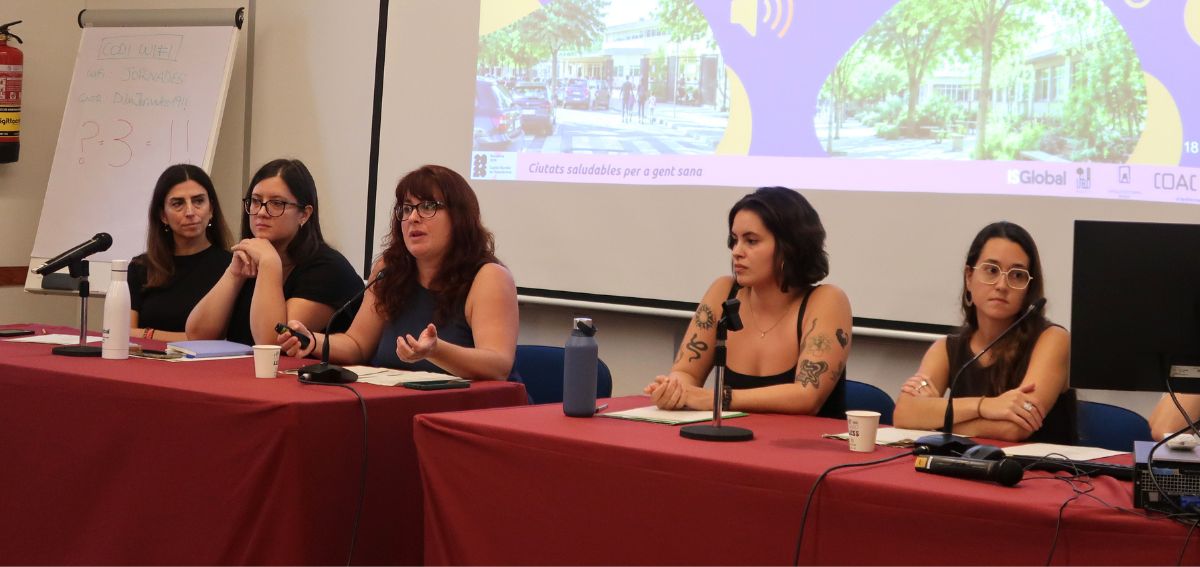
On 14 October, Pati Manning in Barcelona hosted “Healthy cities for healthy people”, a public event organised as part of Barcelona World Capital of Architecture 2026, offering an opportunity to exchange knowledge and reflect on how the environments we live in shape our health and wellbeing. The event brought together specialists from ISGlobal and the Architects’ Association of Catalonia (COAC) to explore the relationship between public health, urban planning and architecture.
The session covered a range of topics, including urban policy, mobility, childhood and school environments, housing, architecture and biomaterials. Drawing on different but complementary perspectives, the speakers highlighted the importance of making health a fundamental consideration in the planning and design of our cities.
The presentations explored how environmental factors such as air pollution, noise, extreme temperatures and a lack of green spaces can affect physical and mental health. In this context, Silvia Gómez presented the UBDPolicy project and explained how health impact assessments can be used to estimate the benefits of urban planning interventions. Measures such as increasing tree cover and expanding green spaces, for example, can reduce exposure to heat and help improve people’s well-being. The ISGlobal Ranking of Cities and the Healthy Urban Design Index (HUDI) were highlighted as part of UBDPolicy’s activities to monitor urban health.
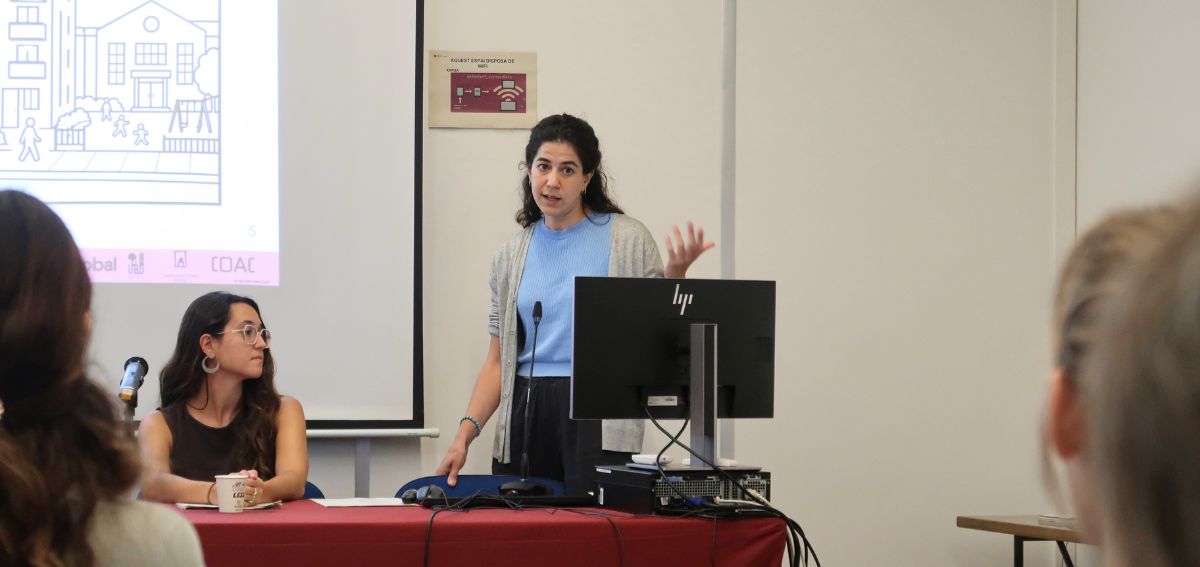
The event was moderated by Clara Castelló.
Turning to the design of public spaces, Inés Valls emphasised the importance of creating accessible, safe and welcoming streets and squares that encourage physical activity and social interaction. Glòria Carrasco, meanwhile, highlighted the need to improve school environments to protect children’s health and support both their wellbeing and learning.
The relationship between housing and health was the focus of Carlota Sáenz de Tejada’s presentation, who discussed how inadequate insulation, poor thermal comfort and overcrowding can affect physical and mental health. Finally, architect Sònia Hernández-Montaño highlighted how biomaterials, including cork, timber and other natural fibres, can contribute to creating healthier, more sustainable buildings.
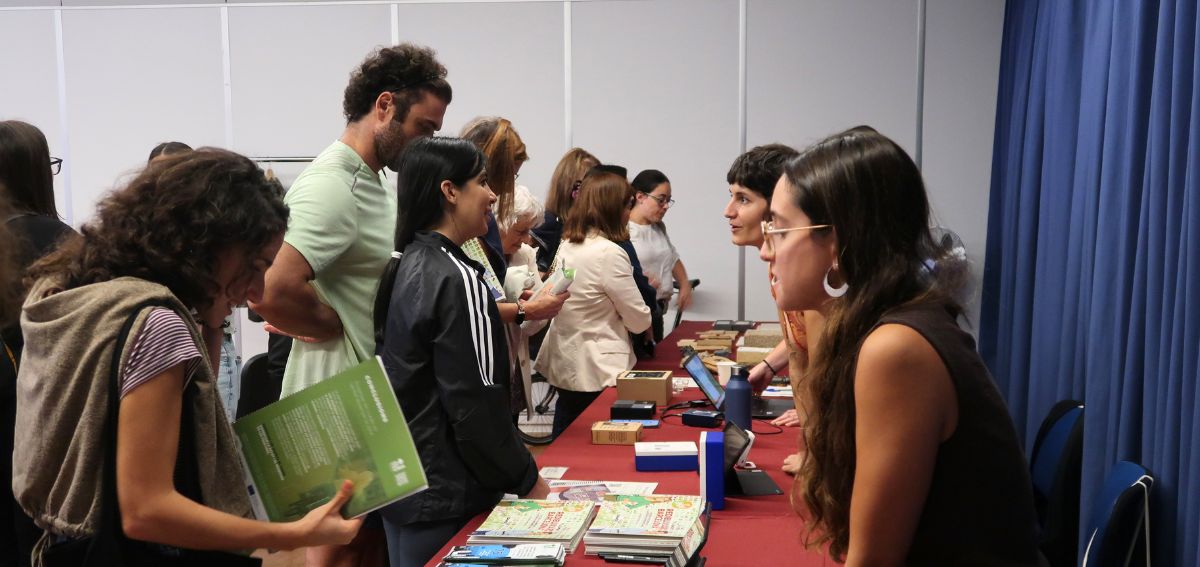
The event concluded with a discussion open to the public, focusing on the challenges of translating scientific evidence into public policy and communicating research findings in a clear and accessible way. The discussion highlighted that public participation and interdisciplinary collaboration are essential to transforming how we design and inhabit our surroundings, helping to create healthier, more sustainable and inclusive cities.
The organisers would like to thank Barcelona City Council for making this event possible.
A new infographic by UBDPolicy explores how urban design and architecture can shape health and wellbeing in cities, using Barcelona as a case study. You can view it here.

