Translating evidence into action: UBDPolicy workshop in Warsaw
A recent workshop held in Warsaw explored new evidence on the health benefits of two major urban environmental policies: sustainable mobility and expanding green spaces
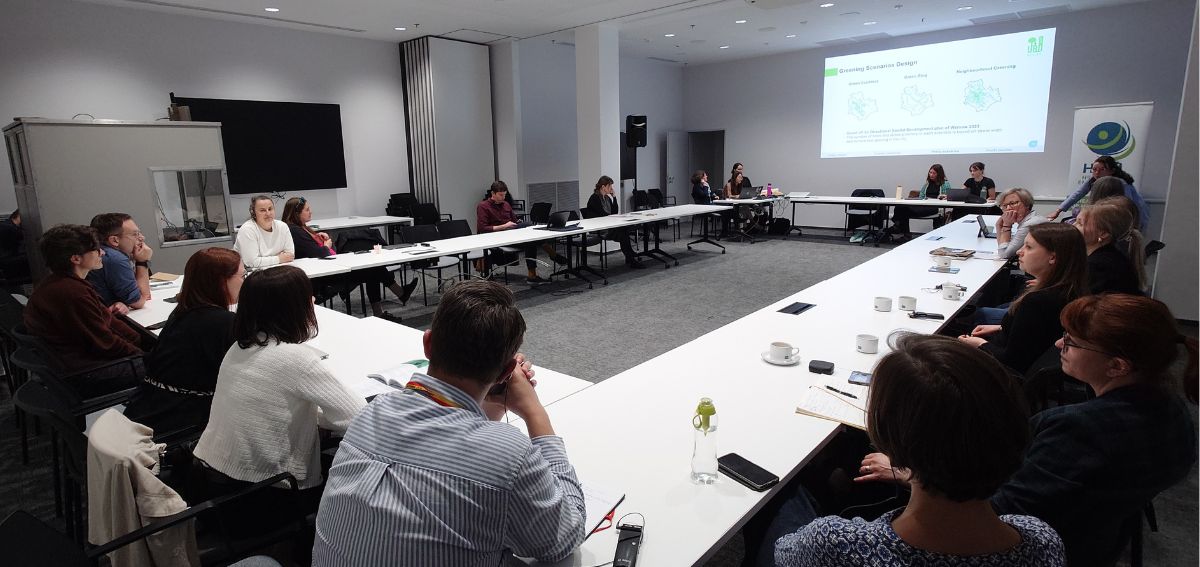
Local policymakers, civil society representatives, and researchers came together at a UBDPolicy workshop held in Warsaw in June to discuss new evidence on the health benefits of two major urban environmental policies: sustainable mobility and expanding green spaces.
The workshop, organised by the Health and Environment Alliance (HEAL) and the Barcelona Institute for Global Health (ISGlobal), focused on how this evidence can be better integrated into current and future policymaking and communicated effectively to the public. The meeting built on a first workshop held in 2024, where participants identified priority urban health challenges and policy scenarios for the city.
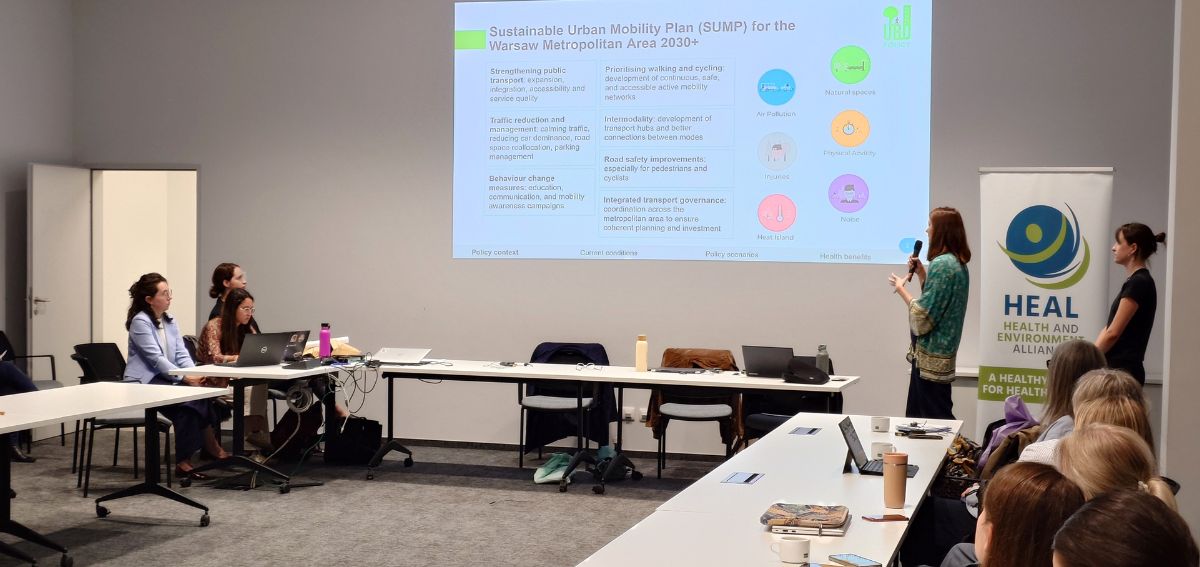
Over the past years, Warsaw policymakers have invested significant efforts into sustainable mobility. In 2023, the Warsaw City Council adopted the Sustainable Urban Mobility Plan for an area covering over 3 million people. The plan includes measures to improve the speed, accessibility, and quality of public transport, while also strengthening walking and cycling infrastructure. Preliminary analyses from the UBDPolicy project suggest that increasing the use of public transport, walking, and cycling could prevent up to 383 premature deaths and more than 1,000 new cases of chronic disease every year.
The workshop discussions highlighted opportunities and challenges in bridging the gap between
science and policy. The workshop represents an important step towards embedding health evidence into urban decision-making. Additional insights and recommendations will be published later this year in a UBDPolicy policy brief and infographic.
The UBDPolicy project, in which HEAL is a partner, aims to estimate the health and socio-economic costs and benefits of air quality, noise, lack of urban green spaces, heat and temperature, physical activity, and inequity for nearly 1,000 European cities in EU.